
KOWON Blog
2 months after hump surgery, still throbbing — is it inflammation? The order for checking pain
If the dorsum still throbs and hurts to touch two months after hump surgery — why inflammation must be checked first, the usual pain course, and what to discuss at the hospital, organized from an actual question and answer.
Key points
- Around 2 months after hump surgery, pain is generally not severe — throbbing can occur, but pain on touching is rare.
- If pain remains on touching past 2 months, check whether it's inflammation first.
- If it isn't inflammation, the next step is visiting the hospital for a full consultation about current symptoms.
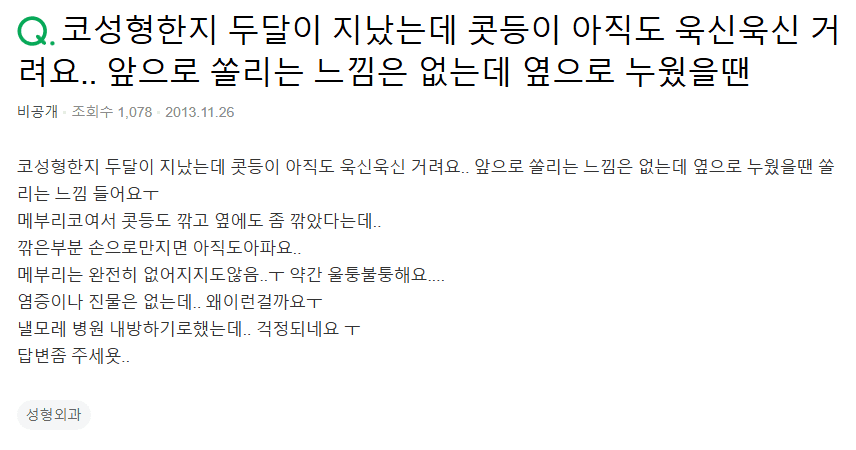
"It's been 2 months since my nose surgery and the dorsum still throbs. It still hurts when I touch the shaved part. There's no inflammation or discharge — why is this happening?"
After hump surgery, some people leave questions out of this kind of worry. Based on an actually submitted question and answer, this article organizes the order in which pain at 2 months post-surgery should be checked.
01
What was the question?
It was a question from someone who had hump-shaving surgery, worried whether the throbbing dorsum pain meant inflammation.
- 2 months past nose surgery, but the dorsum still throbs
- No feeling of tilting forward, but a tilting feeling remains when lying sideways
- The dorsum and sides were shaved slightly for the hump — pain remains when touching the shaved area
- The hump isn't completely gone — still slightly uneven
- No inflammation or discharge, but worried ahead of a hospital visit
02
Is pain past 2 months inflammation?
First, check whether it's inflammation.
Generally, around 2 months post-surgery, pain isn't severe. Throbbing can of course occur, but symptoms like pain on touching are rare. So if pain remains when touching the shaved area as in this question, checking for inflammation first is the right order.
| Check order | Content |
|---|---|
| 1. Check for inflammation | Confirm whether discharge or inflammation findings exist |
| 2. If not inflammation | Visit the hospital for a full consultation on current symptoms |
| 3. Who to consult | Discuss in detail with the medical team who performed the hump surgery |
If it isn't inflammation, visiting the hospital for a sufficient consultation on current symptoms is good. The general recovery flow by post-surgery period can be seen in the rhinoplasty recovery guide.
03
How are hump noses corrected?
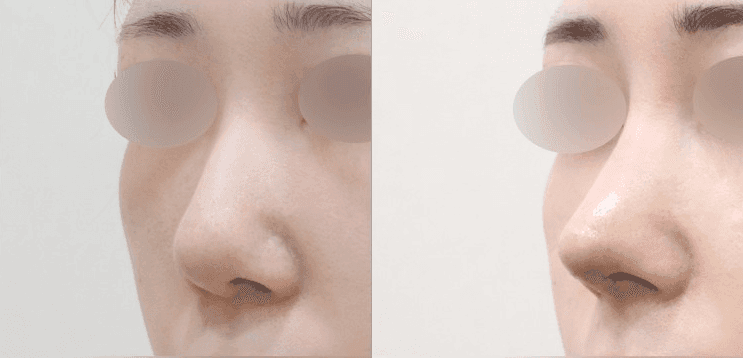
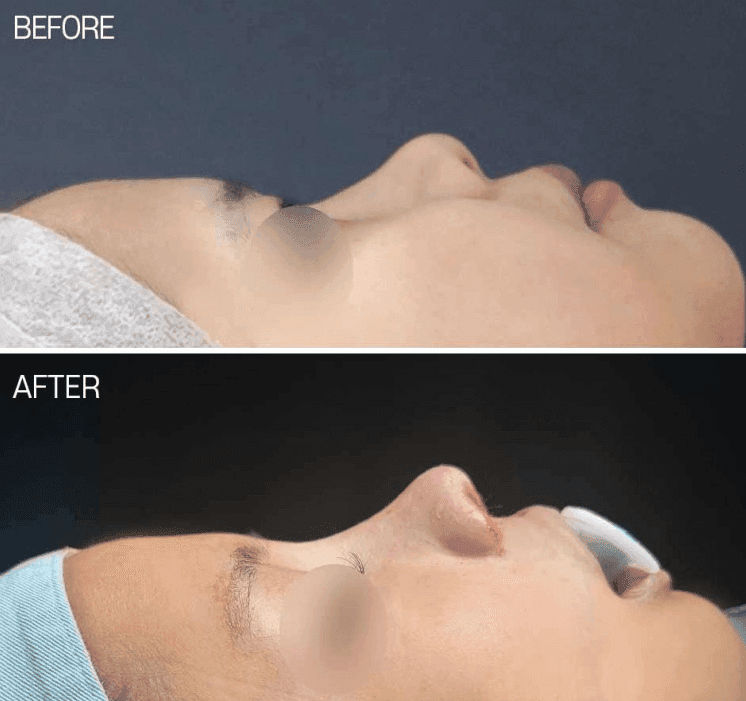
In hump and bulbous correction cases, approaches were made in the following ways.
- 01Hump + short stubby bulbous tip — the tip was widely spread, so cartilage tying was done and the retracted columella was drawn out to balance the whole.
- 02Short nose / upturned nose — the tip was extended to balance the whole face; as the columella and whole nose pulled forward, the bulbous appearance improved and buried alae were revealed.
- 03Hump osteotomy correction — the hump was improved through osteotomy and the depressor muscle resected to correct muscle influence. Since the bridge was originally high, height was raised slightly while performing tip lowering.
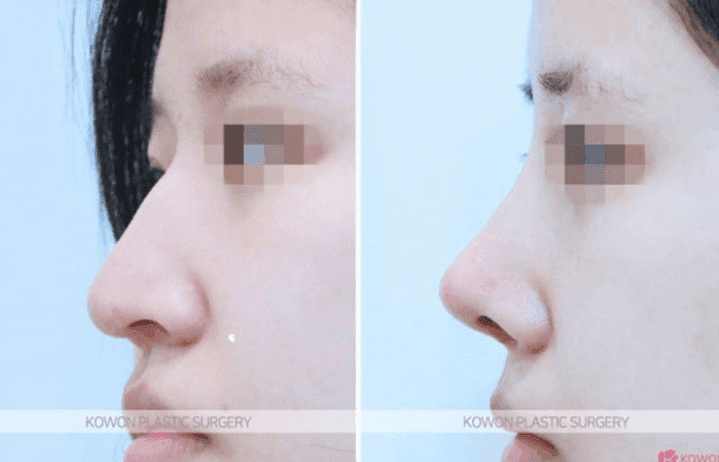
Even for the same hump nose, the correction range differs by tip state, muscle, and bridge height. Actual case-by-case changes can be checked in the before & after photos.
04
Summary — check inflammation first, then see the doctor
If pain on touching remains even 2 months after hump surgery, checking whether it's inflammation comes before only worrying — because in the usual course, pain on touching at this point is rare. If it isn't inflammation, the next step is consulting in detail with the operating medical team to confirm the cause.
If the symptoms worry you, your current state can be checked in a 1:1 video consultation.
Frequently asked questions
Answers to common questions patients ask before a consultation.
Throbbing itself can occur. Still, generally around 2 months in, pain isn't severe and pain on touching is rare. If pain remains on touching, checking for inflammation first is advisable.
No discharge doesn't mean checking can be postponed. In this question too, the advice was to first check whether it's inflammation — and if not, to visit and consult fully about current symptoms.
The original answer didn't hand down that judgment in an online reply — it recommended consulting in detail with the operating medical team, because the state of the shaved area is something that must be confirmed through direct examination.
Responses to treatment and recovery progress vary by individual. Outcomes and side effects vary from person to person. Bleeding, infection, swelling and asymmetry may occur. Please consult our medical team before making a decision.
Consultation