
KOWON Blog
Flat nose — does inserting an implant alone solve it? Correction criteria seen through harmony and stability
A flat nose often isn't just a low bridge — nasal bone spread, thick skin, and subcutaneous fat layer overlap. The risks of inserting only an implant, line choices by face shape, and what to check in re-correction — organized.
Key points
- A flat nose often isn't just a low bridge — the nasal bones spread sideways or the skin and subcutaneous fat layer are thick, making dimensionality weaker.
- So recklessly inserting only an implant risks the line lifting or the tip drooping over time — and raising excessively creates an impression detached from the face.
- The criterion for correction isn't height but harmony within overall facial proportions — designed by analyzing tip support structure, nasal bone line, skin thickness and elasticity, and glabella angle together.
Due to the racial characteristics of Asians, truly many people worry about flat noses. With a low bridge or a broken connection between bridge and forehead, the face's center looks spread — leading them to consider surgery. But this isn't only a matter of raising the bridge; overall dimensionality and harmony have to be considered together for natural change.
After 20 years of rhinoplasty, I've gained one conviction: the nose is the central axis that designs the face's impression. Even at the same height, the impression differs entirely by face shape, forehead, and eye-mouth proportions — so harmony matters. This article organizes points worth knowing before flat nose surgery.
01
Does a flat nose get solved by inserting only an implant?
A flat nose often isn't just a low bridge — the nasal bones may spread sideways, or the skin may be thick with a thick subcutaneous fat layer, reducing dimensionality. So recklessly inserting an implant risks the line lifting or the tip drooping over time, and raising it excessively can create an impression detached from the face.
So in flat nose correction, the following items get analyzed in detail — not just the bridge.
- Tip support structure
- Nasal bone line
- Skin thickness and elasticity
- Glabella angle
The implant is also directly trimmed and shape-adjusted to fit the patient's face. Even if it takes a long time, it's a necessary step for a refined result. When needed, autologous rib cartilage is used to raise the tip's structural stability — since autologous tissue is part of your own body, foreign body reaction is low, the shape holds over time, and it has a natural feel. The autologous tissue approach can be seen in more detail in the autologous rib cartilage guide.
02
My face is round — won't surgery make my impression fierce?
Results differ completely by face shape. What matters in flat nose correction is harmony.
| Face shape | Bridge line that suits |
|---|---|
| Round face | A softly continuing curve looks more natural than a straight bridge |
| Angular face | Balance works when a somewhat straight line goes in |
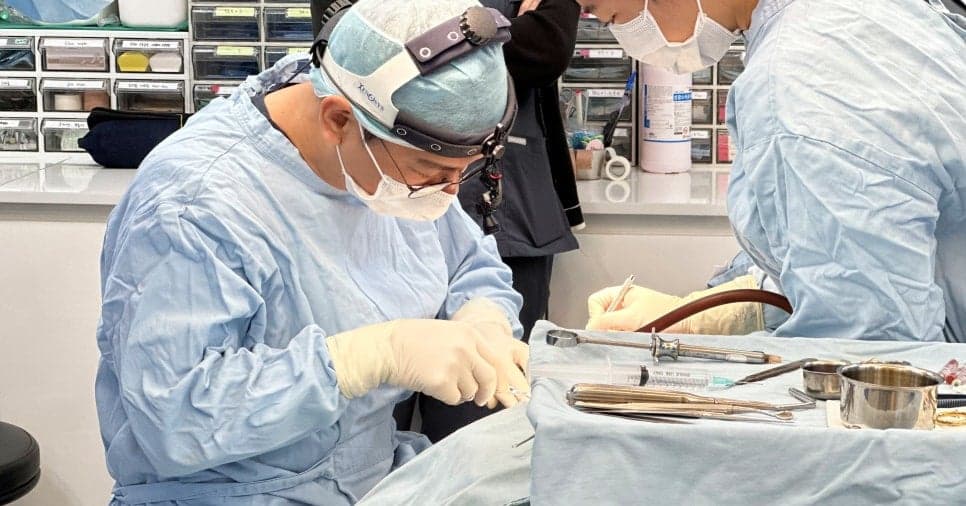
Rather than simply making it high, the shape that looks most natural within the face's overall proportions has to be found first. That's why only two surgeries are performed per day — to focus sufficiently on one person's face rather than increasing case count, and this principle lets even small details get attention.
03
If I correct it, won't it look too obvious?
The core of flat nose correction isn't unconditionally making a pointy or high nose — it's harmonious design considering face shape, skin thickness, and even expression. So from before surgery, a virtual image system is used to show the result in advance, letting the patient see the surgical direction directly and decide.
Also, since many can't visit in person or are overseas, a 1:1 video consultation system is operated. Even with just photos or video, the nasal structure can be grasped to a degree and the procedure direction consulted.
04
Is flat nose re-correction also possible?
If the tip lifted because the existing implant didn't fit, or a lifted feeling emerged over time, re-correction is possible. In that case, the structure has to be designed anew from the start.
- 01Structural reinforcement — if the structure has weakened, a firm pillar is built with autologous rib cartilage.
- 02Soft tissue reinforcement — thin soft tissue is layered onto thinned skin areas for natural reinforcement.
- 03Functional check — if the septum is bent or rhinitis is severe, functional correction has to go in together.
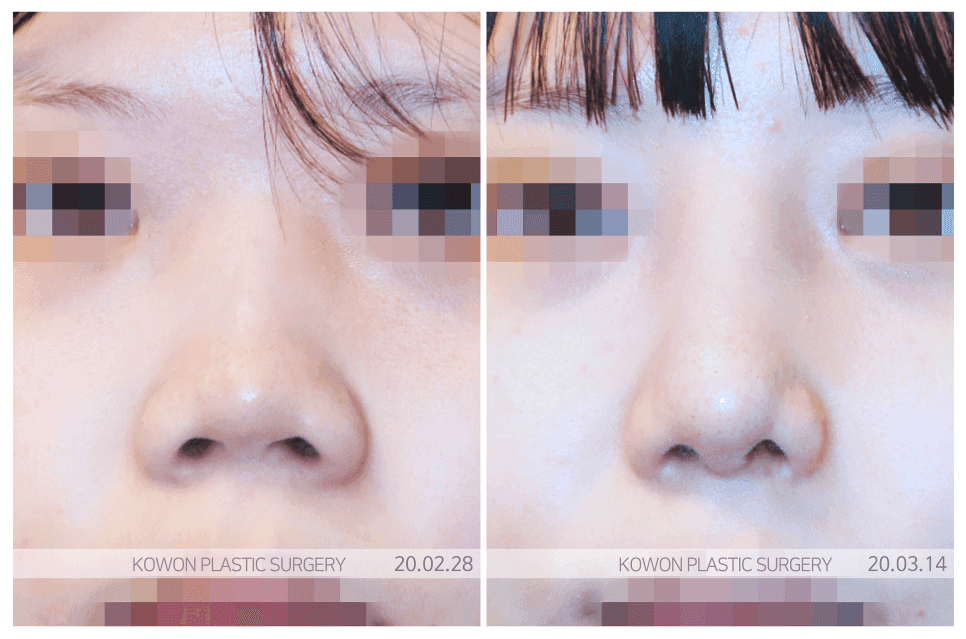
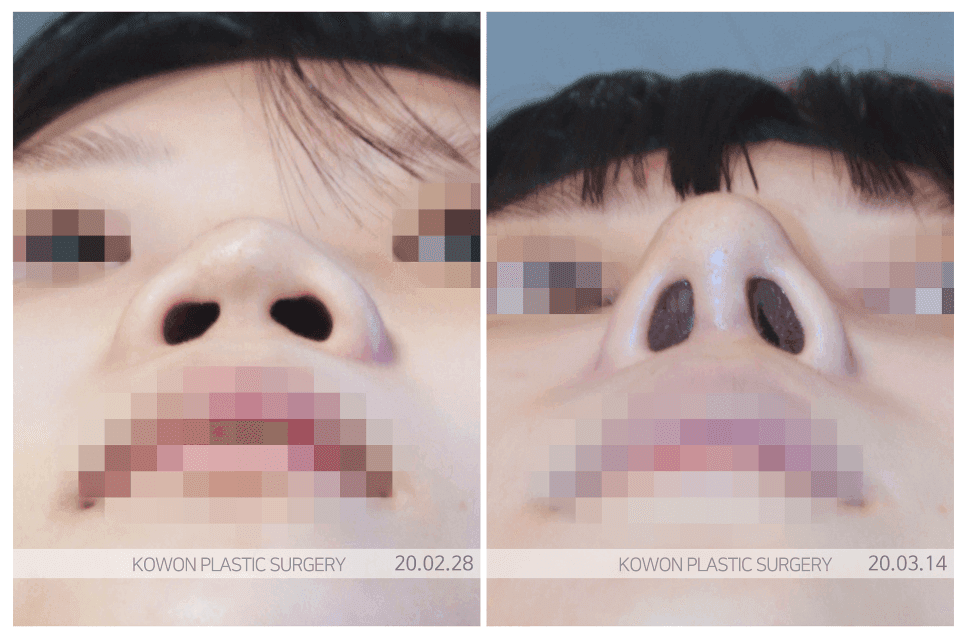
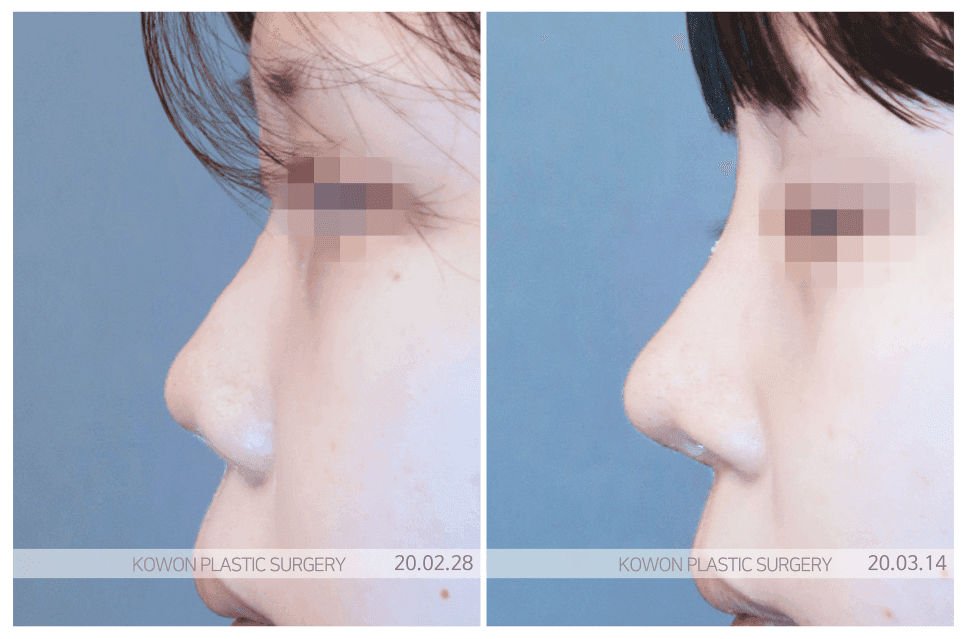
Function and form of the nose have to be handled together — satisfaction lasts a long time only when not just appearance but a structure that makes breathing comfortable is improved together. Actual correction cases can be seen in the before & after photos.
05
Summary — the criteria are harmony, stability, and naturalness over height
In rhinoplasty, how meticulously it's designed decides the final result more than flashy technique. If you're worried your face looks flat because of a flat nose, I recommend thinking with harmony, stability, and naturalness as criteria rather than how much to raise the height.
If you're curious which line fits your face shape, your nasal structure can be checked via photos/video and direction consulted in a 1:1 video consultation.
Frequently asked questions
Answers to common questions patients ask before a consultation.
A flat nose often isn't just a low bridge — nasal bone spread, thick skin, and subcutaneous fat layer overlap. Inserting only an implant without considering these conditions risks a lifted line or tip drooping, so it's designed after analyzing tip support structure, nasal bone line, skin state, and glabella angle together.
For a round face, a softly continuing curved line looks more natural than a straight bridge. Conversely, an angular face needs a somewhat straight line for balance. Finding the shape within overall facial proportions is the criterion.
If the tip lifted or a floating feeling appeared because the implant didn't fit, re-correction is possible. If the structure weakened it's reinforced with autologous rib cartilage, and if there's septal bending or rhinitis, functional correction gets checked together.
Responses to treatment and recovery progress vary by individual. Outcomes and side effects vary from person to person. Bleeding, infection, swelling and asymmetry may occur. Please consult our medical team before making a decision.
Consultation