
KOWON Blog
A Lump at the Pierced Spot, an Ear Keloid Two Years On — Will Salt Water or Tea Tree Oil Make It Go Away?
A two-year-old ear lump after piercing may be an ear keloid. Treatment options like steroid injections or surgery, the need for ongoing treatment to prevent recurrence, and why salt water or tea tree oil is unlikely to work.
Key points
- A lump at a pierced ear spot after piercing may be an ear keloid.
- Keloids have a habit of recurring even after removal, so there are multiple treatment approaches — steroid injections or surgical removal, plus ongoing treatment after removal to prevent recurrence.
- Home remedies like salt water or tea tree oil appear unlikely to be effective.
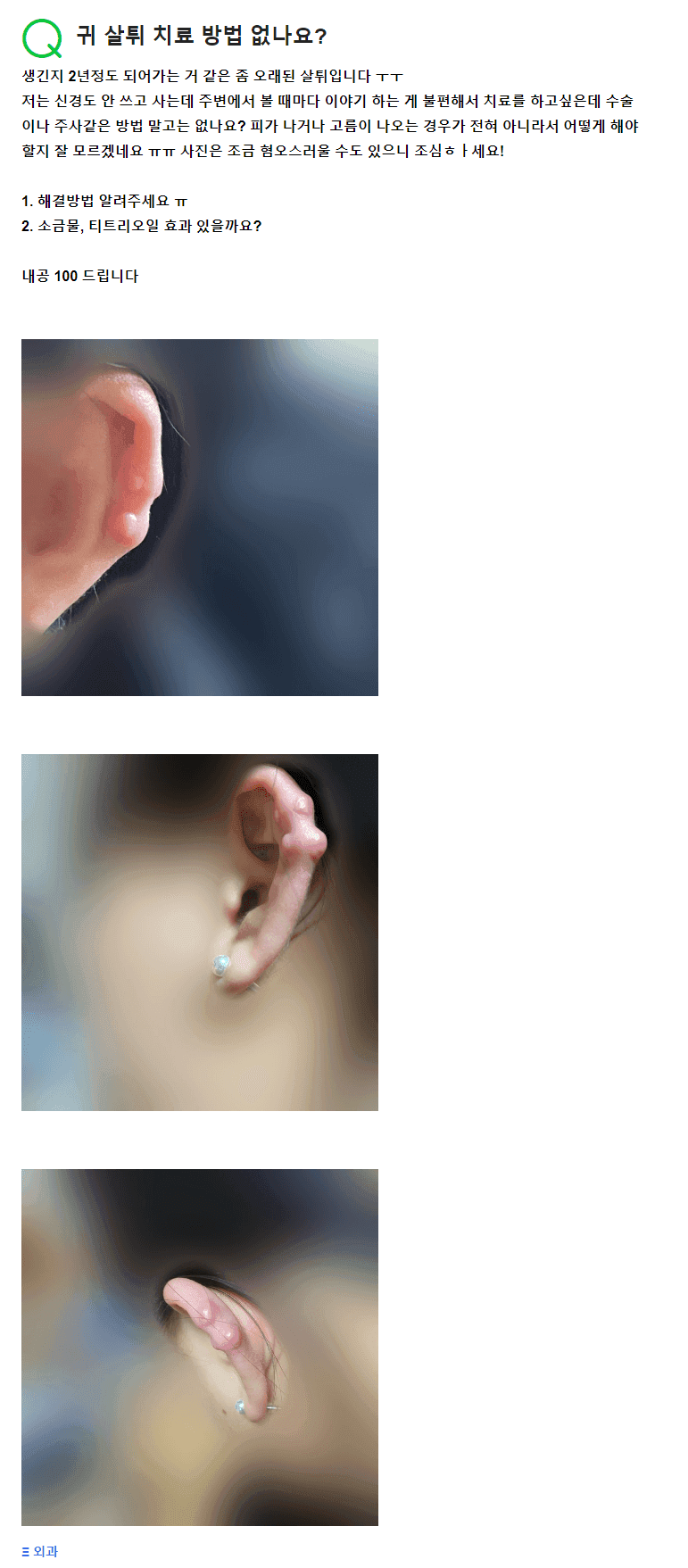
"It's been about 2 years since a lump formed where I got my ear pierced. Is there any way other than surgery or injections?"
A lump that forms after ear piercing is often left alone when there is no pain or pus. Then, once people around keep pointing it out, the person finally starts looking into treatment. This article organizes the answer to a real question from someone troubled by a two-year-old ear lump.
01
What was the question?
It was a question from someone whose lump had been there about 2 years after getting their ear pierced. They had lived without paying it much mind, but the constant comments from people around them became uncomfortable and they wanted treatment. There was no blood or pus at all, and two things were on their mind.
- 01A way to resolve the ear keloid
- 02Whether salt water or tea tree oil works
02
What is the lump at the pierced spot?
What appears to be the lump at the asker's pierced spot is an ear keloid. It seemed like a situation where a lump that formed 2 years ago was left alone as "probably fine," until repeated comments from others built up stress.
A defining trait of keloids is a habit of recurring even after removal. That is why keloid treatment is not a single method — several are available.
03
How is an ear keloid treated?
| Type | Details |
|---|---|
| Injection treatment | Treated with steroid injections |
| Surgical treatment | The keloid is removed surgically |
| After removal | Ongoing treatment is needed to prevent recurrence |
| Home remedies (salt water, tea tree oil) | Appear unlikely to be effective |
Steroid injections or surgical removal are used — but either way, ongoing treatment to prevent recurrence must follow removal. The salt water or tea tree oil you asked about appear unlikely to work, so rather than spending time on home remedies, it is better to consult about treatment options.
04
Summary — a treatment plan comes before neglect or home remedies
An ear lump persisting for 2 years with no blood or pus can be an ear keloid, and home remedies like salt water or tea tree oil are unlikely to help. Removing it with steroid injections or surgery, then continuing recurrence-prevention treatment, is the basic direction. If you are curious which treatment fits your condition, you can check through a 1:1 video consultation.
Frequently asked questions
Answers to common questions patients ask before a consultation.
A lump that remains after 2 years, as in this case, may be an ear keloid. Since keloids have a habit of recurring even after removal, it is better to look into treatment rather than leave it.
Salt water and tea tree oil appear unlikely to be effective. Ear keloids are treated with options like steroid injections or surgical removal, and recurrence-prevention treatment is needed afterward.
Keloids have a habit of recurring even after removal. That is why ongoing treatment to prevent recurrence is needed afterward.
Responses to treatment and recovery progress vary by individual. Outcomes and side effects vary from person to person. Bleeding, infection, swelling and asymmetry may occur. Please consult our medical team before making a decision.
Consultation