
KOWON Blog
Pros and Cons of Donor Rib Cartilage — What Criteria Decide Cartilage Choice in Rhinoplasty?
What donor rib cartilage is and how it's processed, its advantages of no chest scar or harvest pain, drawbacks like absorption potential and long-term support, and the criteria for weighing it against autologous rib cartilage.
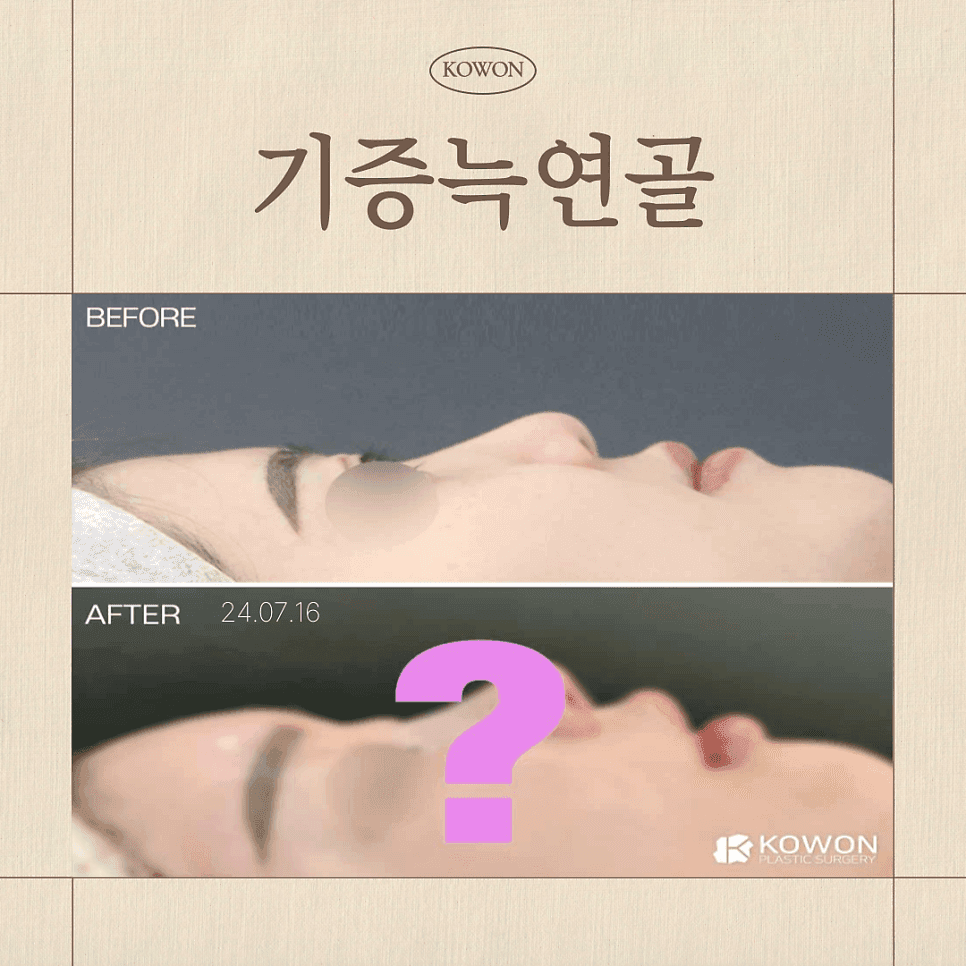
Key points
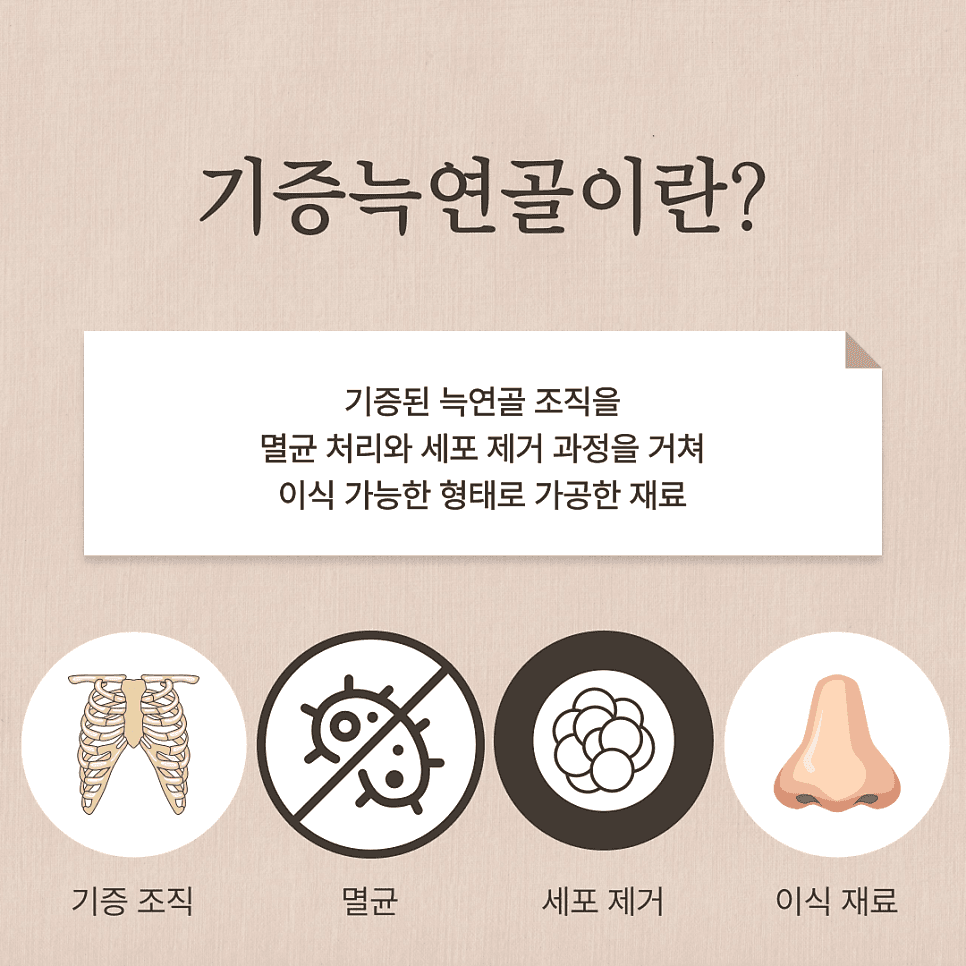
- Donor rib cartilage is a material processed from donated rib cartilage tissue through sterilization and cell removal, usable without a chest incision.
- Its advantages are no chest scar or harvest pain and sufficient cartilage quantity — but partial absorption potential and maintaining long-term support are variables to consider.
- Material choice isn't a simple comparison of "which is better" — it's decided by looking together at your current nasal structure, surgical history, and personal standards regarding scarring.
"I'm told I need rib cartilage, but I'm hesitant because they say it leaves a scar on my chest."
It's a common remark in rhinoplasty consultations. Rib cartilage is the material used to build a tip structure that needs support — but some people hesitate because autologous rib cartilage requires harvesting cartilage from your own chest. In those cases, donor rib cartilage — usable without any harvest process — is discussed as an option.
This article organizes what donor rib cartilage is, its pros and cons, and the criteria for weighing it against autologous rib cartilage.
01
What kind of material is donor rib cartilage?
Donor rib cartilage is a material processed into an implantable form from donated rib cartilage tissue through sterilization and cell removal. Tissue managed through medical tissue banks is used.
Because it's someone else's tissue, some people feel initial reluctance. But when your own tissue is insufficient, or when a chest incision from the very first surgery feels psychologically burdensome, it's one of the options that can serve as a strut supporting the tip.
02
What are the advantages of donor rib cartilage?
Donor rib cartilage is discussed because of advantages like the following.
- 01No chest scar remains — autologous rib cartilage requires an incision along the inframammary line to harvest cartilage, but donor rib cartilage involves no harvest process at all.
- 02No pain from harvesting — after autologous rib cartilage harvest, pain can accompany recovery for a period; donor rib cartilage reduces that burden.
- 03Surgery time can be shortened — in some cases the overall procedure becomes simpler because the cartilage harvest step is omitted.
- 04Sufficient cartilage quantity — even for people whose septal cartilage is small and weak, or revisions where autologous cartilage was already used in a previous surgery, a sufficient amount of support structure can be secured.
03
Are there disadvantages to donor rib cartilage too?
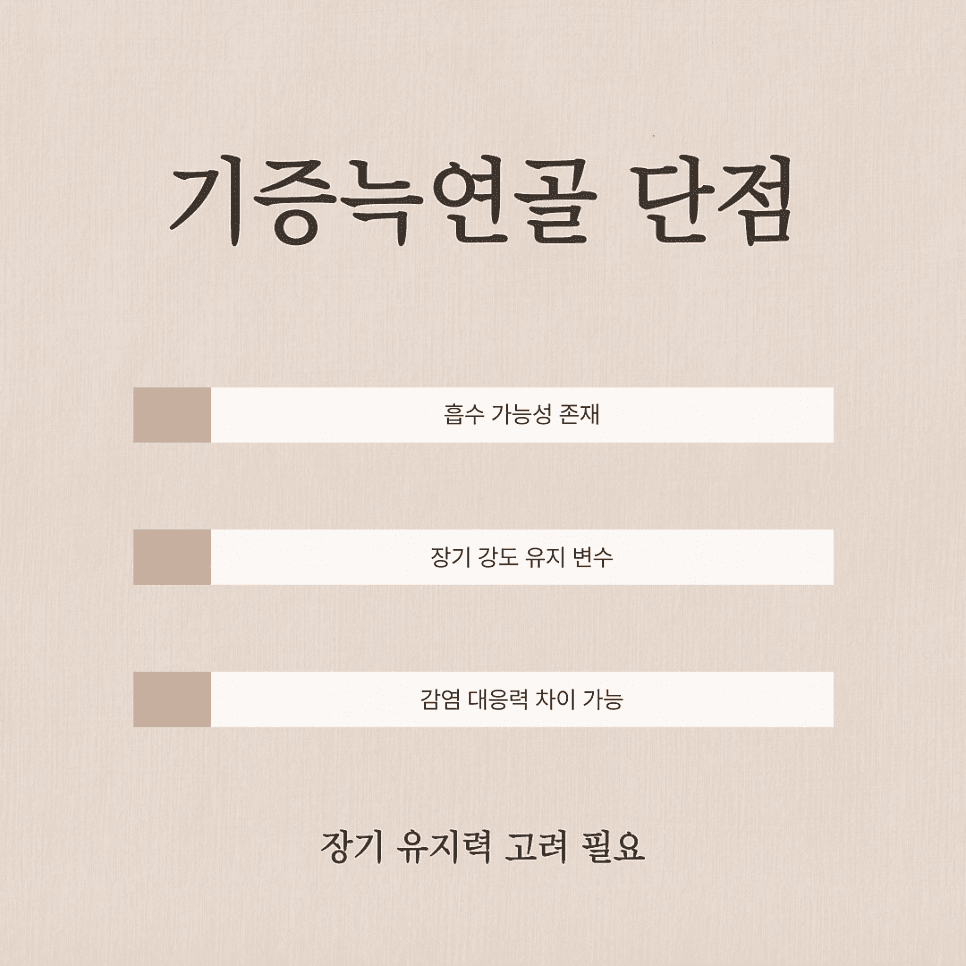
Yes. When considering donor rib cartilage, the following three points should be reviewed together.
| Point to consider | Details |
|---|---|
| Absorption potential | Because it isn't your own tissue, partial absorption can occur over time |
| Long-term strength retention | Even with sufficient initial strength, it can be difficult to maintain support as stable as autologous rib cartilage over the long term |
| Infection response | Autologous tissue gains the ability to respond to inflammation once blood flow connects, but donor tissue can differ in this regard |
That's why material selection can differ depending on how sturdy the nasal structure needs to be built.
04
Then how are donor and autologous rib cartilage weighed?
What matters isn't a simple comparison of which material is better, but choosing what fits the current nasal condition.
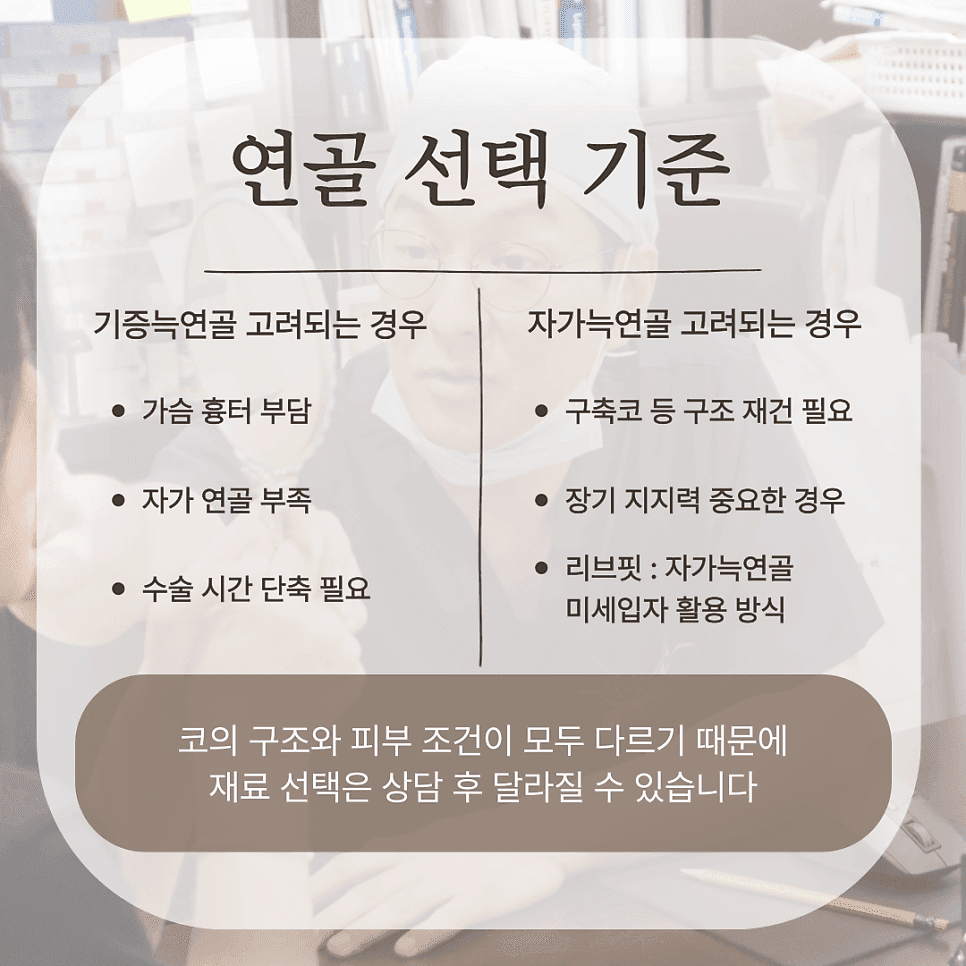
Donor rib cartilage can be considered in cases like the following.
- When a chest incision scar feels burdensome
- Revision surgery where autologous cartilage is insufficient
- When you want to shorten surgery time
- Cases needing structural reconstruction, like a contracted nose
- Cases where long-term support matters
Conversely, autologous rib cartilage is discussed in the following cases.
In actual consultations, because each patient's nasal structure and skin conditions all differ, material selection frequently differs as well. Recently a method is also being explained where autologous rib cartilage is processed into fine particles and fabricated into a shape fitting the individual's nasal structure to create the bridge line — at KOWON this is described as RIBFIT™. The full picture of each material's characteristics can be seen together in the rhinoplasty materials guide.
05
Summary — your nasal structure comes before the material
Each rhinoplasty material has its own characteristics. Rather than declaring one material unconditionally better, what matters is considering the nasal structure, surgical history, and personal standards about scarring together. In actual consultations too, the suitable material changes every time depending on skin thickness and cartilage condition. Rather than comparing the materials themselves, the process of first confirming your nasal structure and finding a fitting direction should come first — and donor rib cartilage is one of those options.
If you're curious which material suits your nose, the nasal structure can be checked and discussed in a 1:1 video consultation.

Frequently asked questions
Answers to common questions patients ask before a consultation.
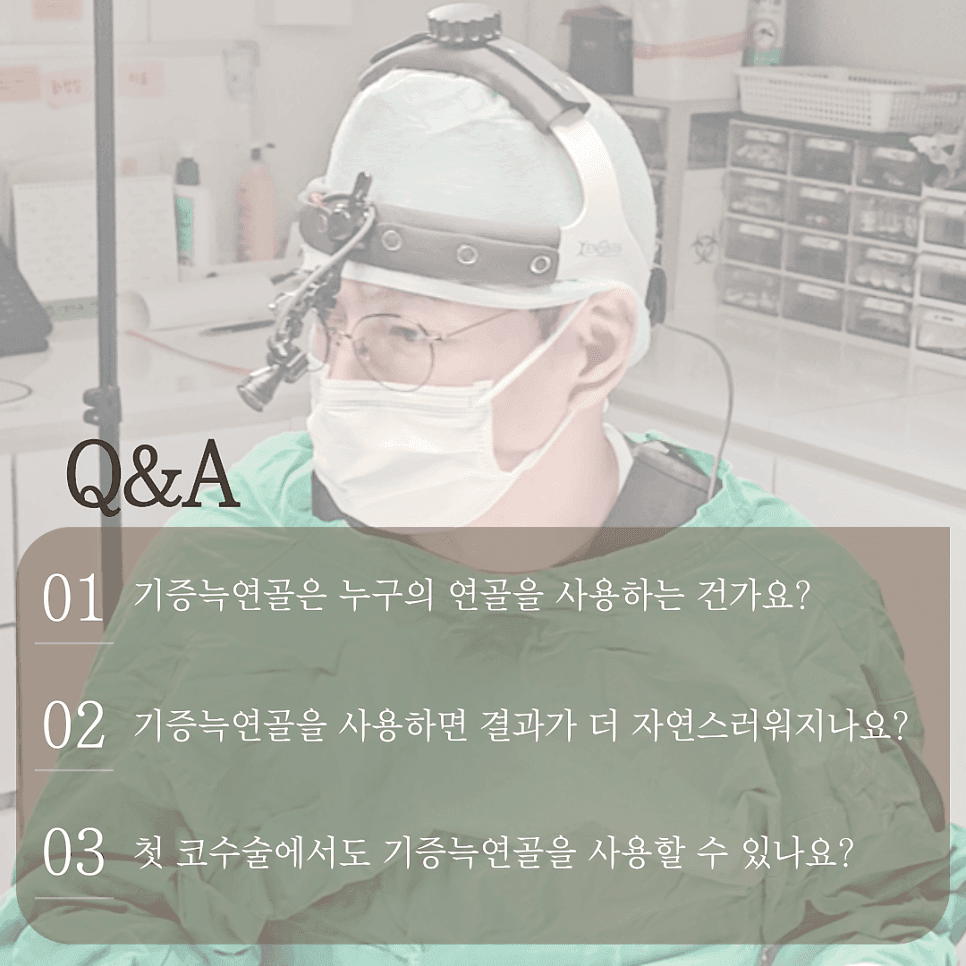
It's a material processed into an implantable form from donated rib cartilage tissue through sterilization and cell removal. Tissue managed through medical tissue banks is used.
Naturalness often depends on the nasal structure and design rather than the material used. Cartilage is frequently used as the material for building tip support structure.
It can be considered even in first surgeries when the tip support structure is insufficient or cartilage quantity is lacking. Still, the actual choice can differ depending on nasal structure and surgical goals.
Responses to treatment and recovery progress vary by individual. Outcomes and side effects vary from person to person. Bleeding, infection, swelling and asymmetry may occur. Please consult our medical team before making a decision.
Consultation