
KOWON Blog
Deviated Nose Surgery vs. Two-Jaw Surgery — Which Comes First? Why Order and Cause Are Checked First
Why a crooked-looking nose is more often caused by an internal structural problem like septal deviation than by trauma, the order that postpones deviated nose surgery until after skeletal change when two-jaw surgery is planned, and an implant-free deviated nose correction case.
Key points
- The cause of a crooked-looking nose is more often an internal structural problem like septal deviation than childhood trauma. Cause diagnosis comes before self-blame.
- If two-jaw surgery is planned, the usual order is to consider deviated nose surgery after the facial skeletal change — and if you've decided against two-jaw surgery, the current state is diagnosed before judging whether correction is needed.
- Nasal deviation can connect to functional aspects as well as appearance, so if needed, a direction that straightens the structure is reviewed.
"I squeezed a pimple on my nose in middle school and heard a 'crack.' I think my nose has been crooked since then — but at a two-jaw surgery consultation they told me to get two-jaw and deviated nose surgery together. Two-jaw surgery feels like a burden so I'm not going to do it — do I still need deviated nose surgery?"
When the nose looks crooked to one side or asymmetry is felt, it often leads not just to appearance concerns but psychological withdrawal. Many people blame themselves for a long time, believing a small incident or trauma during their growth years was the cause. In reality, though, the nose more often looks crooked due to internal structural factors rather than external irritation.
Based on an actual inquiry with this concern, this article organizes the advisable order and criteria for approaching deviated nose surgery.
01
Is the cause of the crooked appearance really that old trauma?
There's something to point out first. It's hard for nasal bone to fracture or deform significantly from the amount of force used to squeeze a pimple. Nasal structure damage from that level of pressure is rare, and cartilage is unlikely to bend instantly.
If the nose looks crooked on the outside, the cause is more likely an internal structural problem like septal deviation. So rather than blaming yourself — "it's because I touched my nose wrong back then" — what comes first is confirming through diagnosis what state the inner structure of your nose is currently in.
Nasal deviation may not end at appearance. Since it can connect to functional aspects beyond the external look, if needed, a method of straightening the structure with deviated nose surgery can be reviewed.
02
If two-jaw surgery is planned, when is deviated nose surgery done?
The order differs depending on whether two-jaw surgery is planned.
| Situation | Order of approach |
|---|---|
| Two-jaw surgery is planned | The usual order is to consider deviated nose surgery after the facial skeletal change |
| Decided against two-jaw surgery | After accurately diagnosing the current state, judge whether to correct with deviated nose surgery |
Since two-jaw surgery changes the facial skeleton itself, it's more reasonable to judge the nasal line after that change has settled. Conversely, if you've decided against two-jaw surgery, there's no reason to postpone the decision — you can review whether correction is needed based on the current nasal condition.
03
What was checked together in the actual deviated nose correction?
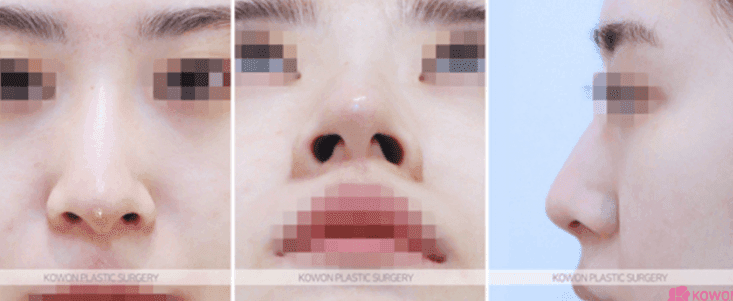
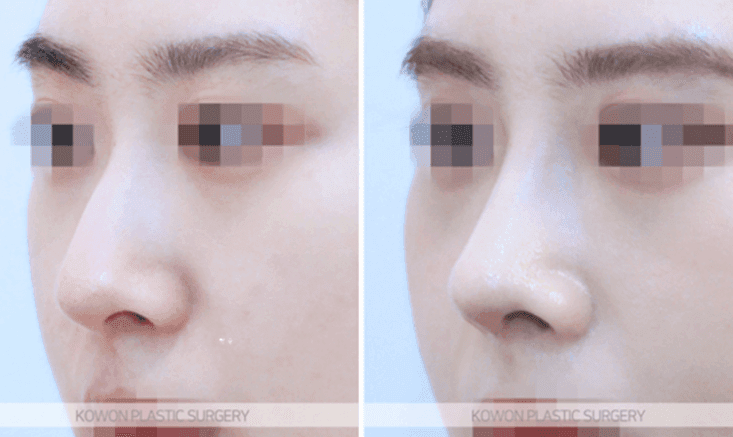
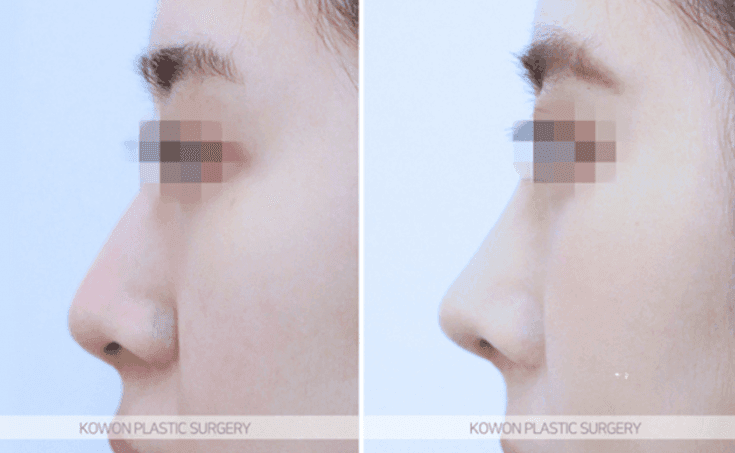
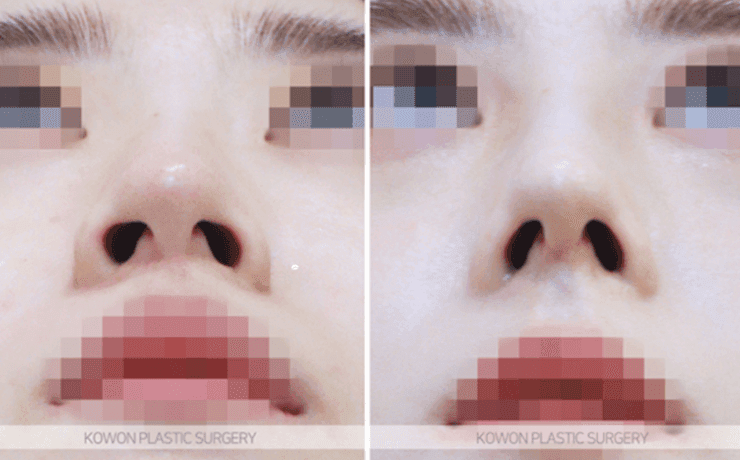
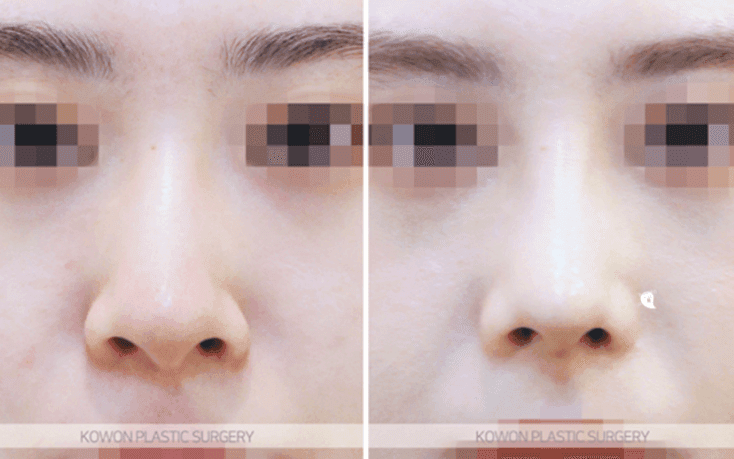
Looking at an actual correction case (the images were used with the model's consent), photos were taken from multiple angles to accurately identify the condition, and in the frontal photo the bridge was confirmed to be shifted right of the centerline. It's a representative type where deviated nose surgery is considered.
The checking and correction didn't stop at the deviation alone.
- 01Tip condition — it wasn't excessively thick, but the cartilage was splayed, making the tip look wide and spread. The plan was to proceed with tip cartilage tying and osteotomy together, tidying the line and gathering the spread cartilage.
- 02The part that looked droopy downward — the depressor septi muscle was adjusted to balance it.
- 03Bridge height — it was sufficient, so the direction was an implant-free approach with no separate implant. It was a fitting choice for pursuing natural change while reducing unnecessary foreign material.
In the before-and-after comparison, the bumpy bridge line was tidied and flowed smoothly, and in the side view the proportions of the relatively prominent mouth and nose line harmonized naturally. The nose, which occupies a large share of the face, can change the overall balance even with small corrections. Conditions for implant-free rhinoplasty are in the implant-free rhinoplasty guide, and actual before-and-after corrections can be seen in the before-and-after photos.
04
If the alar looks wide, should alar reduction come first?
That's not always the case. Just because the alar is wide doesn't mean alar reduction is the only solution — as in the case above, there are quite a few cases where the spread-looking impression improves sufficiently with tip cartilage tying alone.
In this case too, alongside the deviated nose surgery effect of straightening the crooked part, the bulbous correction effect of easing the spread impression was confirmed at the same time. In the end, what matters is a process that sufficiently reviews a method fitting your individual nasal structure, rather than deciding on a procedure name first.
05
Summary — diagnosis over self-blame, order over procedure names
When the nose looks crooked, what's needed isn't self-blame — "it's because of what happened back then" — but cause diagnosis. The cause of a crooked appearance is more often an internal structural problem, and the timing of deviated nose surgery also differs depending on whether two-jaw surgery is planned. And in actual correction, not just the deviation but the tip cartilage, muscle, and bridge height are checked together to decide a method fitting the individual structure.
If you're curious whether your nose's deviation is a state that needs correction, it can be checked in a 1:1 video consultation.
Frequently asked questions
Answers to common questions patients ask before a consultation.
Cases where nasal bone fractures or cartilage bends instantly from light pressure like squeezing a pimple are rare. The cause of a crooked appearance is more likely an internal structural problem like septal deviation — so confirming the cause through diagnosis comes first.
If two-jaw surgery is planned, the usual order is to consider deviated nose surgery after the skeletal change. If you've decided against it, the current state is accurately diagnosed and then correction is judged. Either way, it helps to settle the direction on two-jaw surgery first.
If bridge height is sufficient, an implant-free approach without an implant can be considered. In the case above too, bridge height was sufficient so no implant was used, and the line was tidied with tip cartilage tying and osteotomy.
Responses to treatment and recovery progress vary by individual. Outcomes and side effects vary from person to person. Bleeding, infection, swelling and asymmetry may occur. Please consult our medical team before making a decision.
Consultation