
KOWON Blog
Is Deviated Nose Surgery Covered by Insurance? — Answering 4 Questions About a Nose Made Asymmetric by Trauma
Four questions from a man in his 30s whose bridge became asymmetric after childhood trauma — whether insurance applies to rhinoplasty, postoperative lifestyle inconvenience, how a deviated hump nose is corrected, and when glasses can be worn — answered here.

Key points
- Deviated nose surgery for cosmetic purposes is not covered by national health insurance, and under medical law the cost cannot be disclosed online.
- A deviated hump nose is generally performed by removing the hump through an incision inside the nose and correcting the deviated part together — the exact method can only be known by examining the nose in person.
- For 1–2 months after surgery, glasses cannot be worn; contact lenses can be used in the meantime, and there's no need to consider vision correction surgery just for that.
"After an injury as a child, my bridge became asymmetric left to right. Should I get deviated nose surgery? Is it covered by insurance?"
This article is based on actual questions from a man in his 30s considering deviated nose surgery. After being hit on the nose by a thick ruler as a child, one side of the bone protruded slightly and the bridge became asymmetric — the nose looked different from the front and the side. He'd always had a nose complex and felt his confidence dropping, asking four things: insurance coverage, aftereffects, the surgical method, and wearing glasses.
This article organizes the answers to those four questions, along with deviated and hump nose correction cases worth referencing.
01
Is deviated nose surgery covered by insurance?
It is not. Surgery received over concerns about nasal shape is cosmetic in nature, so national health insurance does not apply.
Cost is often asked about together — but under medical law, costs cannot be disclosed online. Please understand: what varies by your nasal condition and surgical scope is most accurately confirmed through consultation.
02
Are there aftereffects or lifestyle inconveniences after surgery?
Whether there will be aftereffects cannot be settled from a story alone — the condition must be examined directly. In daily life, glasses must be avoided for 1–2 months after surgery, so if you normally wear glasses, prepare an alternative for that period in advance. Period-by-period precautions after surgery are covered in more detail in the rhinoplasty recovery guide.
03
How is a deviated hump nose operated on?
The questioner said his nose was originally large and high, with a hump. In this case the nose must be examined in person to know exactly, but in general it's performed as surgery that removes the hump through an incision inside the nose. If the nose is deviated, the deviated part is corrected together.
The answers to the four questions are organized as follows.
| Question | Answer summary |
|---|---|
| 1. Insurance and cost | Not covered as it's cosmetic; cost cannot be disclosed online |
| 2. Aftereffects · lifestyle inconvenience | Aftereffects are judged by direct examination; avoid glasses for 1–2 months after surgery |
| 3. Surgical method | Hump removed through an incision inside the nose; deviated part corrected together |
| 4. Glasses after surgery | Cannot be worn for 1–2 months — use lenses in the meantime |
04
What correction cases with similar concerns are there?
Here are three cases worth referencing.
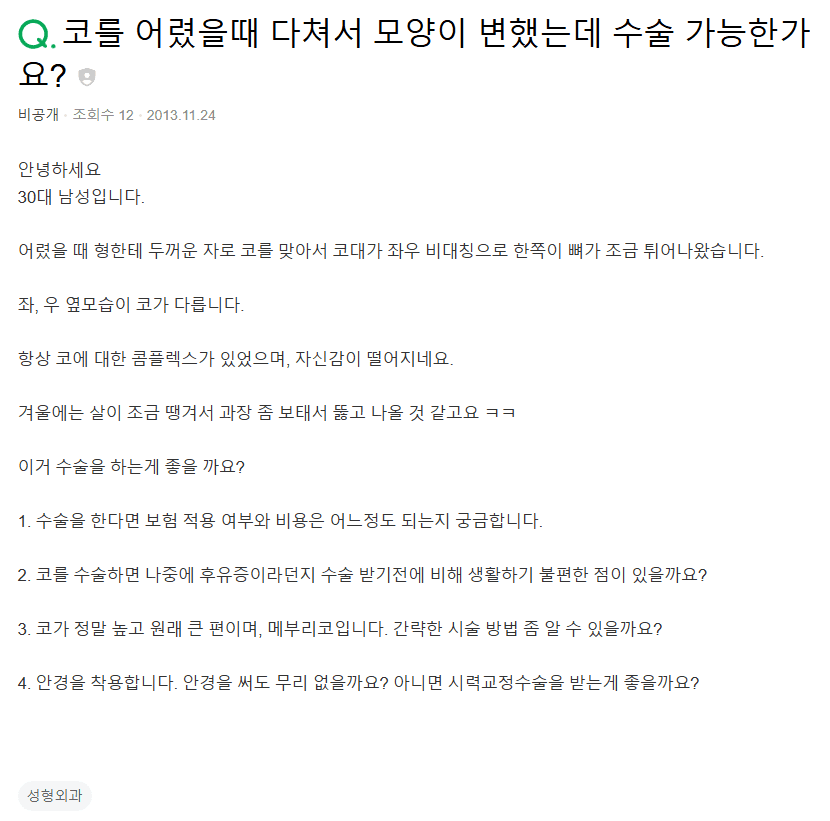
- 01A man with a hump but a small, low nose — after hump nose surgery raised the tip, the drooping impression eased and the nasal line flowed smoothly.
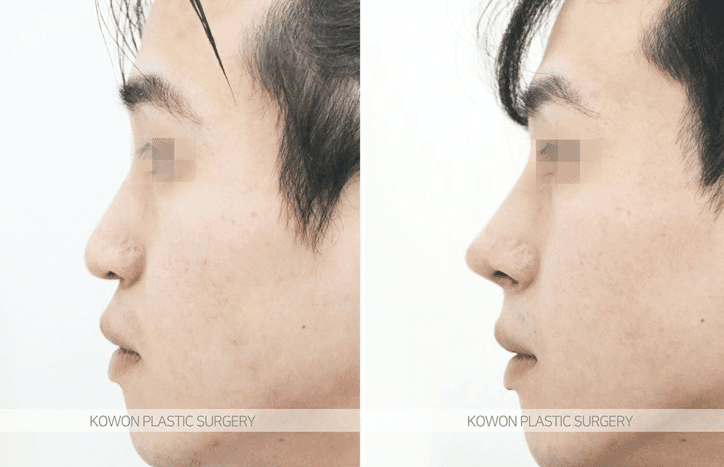
- 02A woman whose nose curved to one side with different nostril sizes — the deviated hump nose was improved through osteotomy. The crooked nose was corrected straight and the alar width visibly changed.
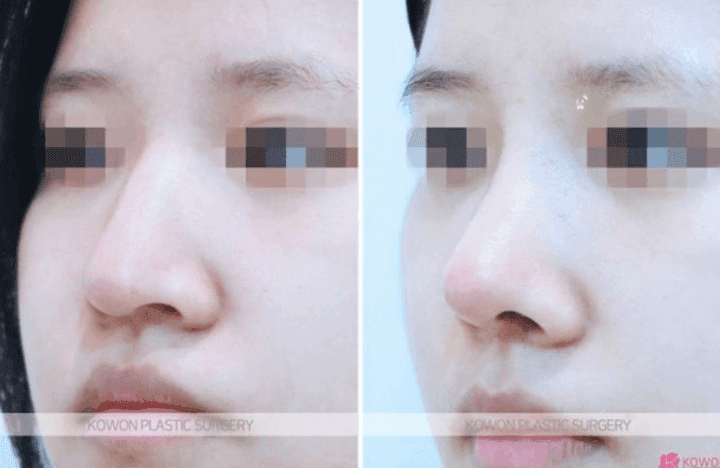
- 03A short nose surgery case — the short tip was lengthened with septal extension, and since there was a downward-drooping tip impression, depressor septi muscle removal was performed together.
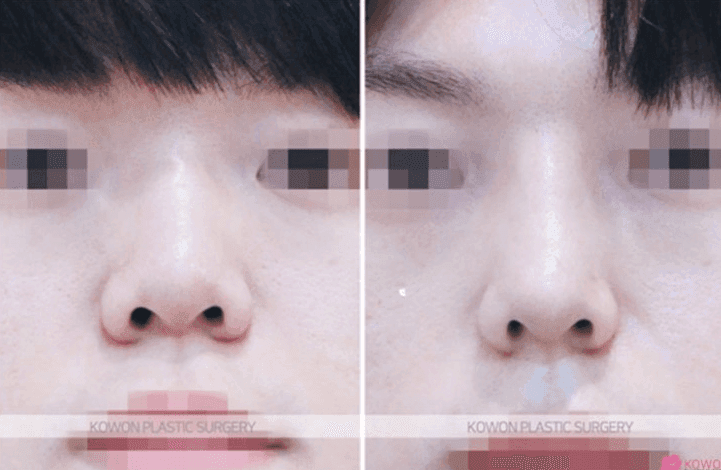
Even for the same "crooked nose," the actual surgical composition differs depending on whether a hump is involved, the nose's size and height, and nostril asymmetry. Each case's before-and-after changes can be seen in the before-and-after photos.
05
Summary — online answers give direction; judgment starts with direct examination
Nasal asymmetry caused by trauma tends to pile up alongside daily inconveniences like skin tightness in winter, and a complex. Knowing in advance that insurance doesn't apply — and practical points like the 1–2 month glasses restriction after surgery — makes the decision much easier. Still, the surgical method and scope can't be confirmed by photos or writing alone; a step where the nasal condition is examined directly is essential.
If you're curious about the degree of deviation and correction direction for your nose, it can be checked in a 1:1 video consultation.
Frequently asked questions
Answers to common questions patients ask before a consultation.
Surgery to improve nasal shape is cosmetic, so national health insurance does not apply. Costs cannot be disclosed online under medical law and must be confirmed through consultation.
Glasses cannot be worn for 1–2 months after surgery. Contact lenses can be used in the meantime — there's no need to consider vision correction surgery just for glasses.
As in this questioner's case, the general guidance was removing the hump through an incision inside the nose and correcting the deviated part together. Still, the exact surgical method can only be decided after examining the nose in person.
Responses to treatment and recovery progress vary by individual. Outcomes and side effects vary from person to person. Bleeding, infection, swelling and asymmetry may occur. Please consult our medical team before making a decision.
Consultation