
KOWON Blog
Bulbous Tip Surgery: Is Narrowing the Alae Enough? — Distinguishing Blunt, Spread, and Smile-Spread Noses
A bulbous nose isn't only about bridge height. This article organizes how to distinguish blunt and spread noses using three criteria — tip shape, alar condition, expression change — and why narrowing the alae alone often isn't enough.
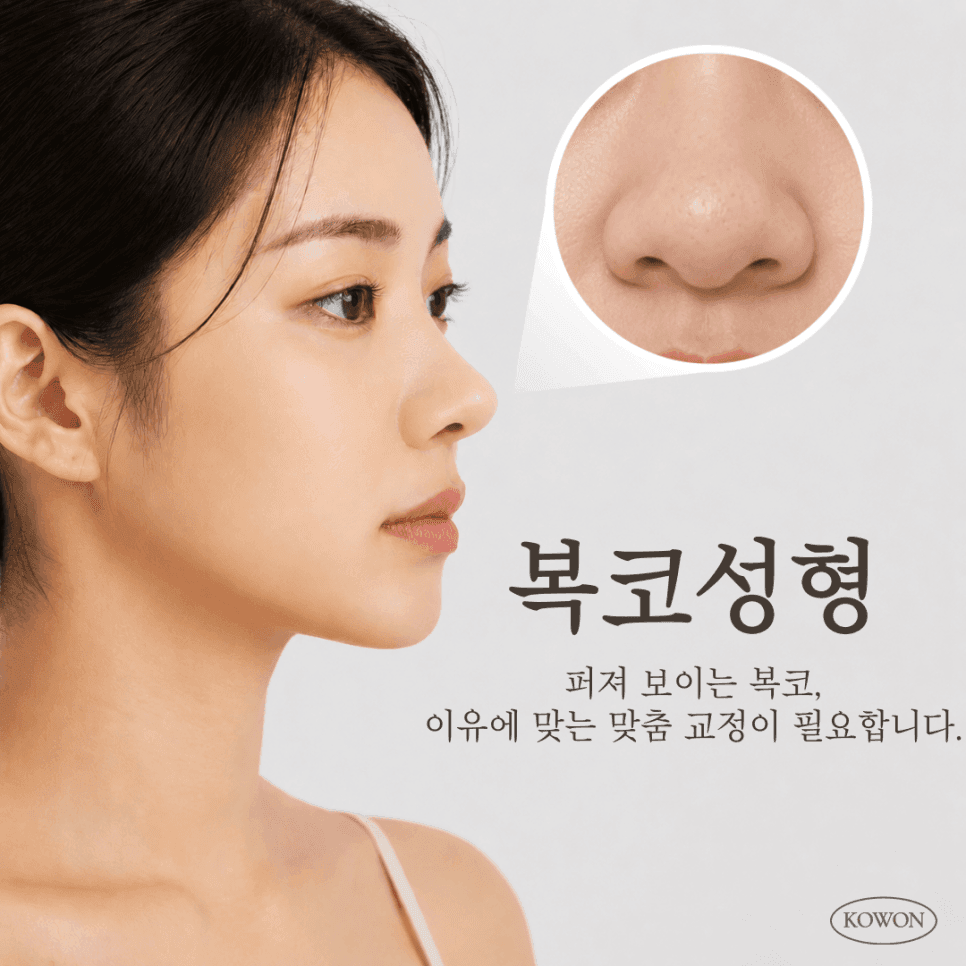
Key points
- A bulbous nose isn't decided by bridge height alone — it's judged by tip shape, skin thickness, alar spread, and how much the nose widens when smiling, together.
- If it looks wide even at rest, the tip/alar structure itself is the factor; if it only spreads when smiling, muscle movement is the factor to check.
- Raising only the bridge may change the profile while leaving the frontal spread unchanged, so the direction is set by looking at the width-to-height ratio, expression change, and overall facial balance together.
Sometimes a nose looks fine in the mirror but rounder and wider in photos. Especially when the profile looks fine but the front view seems spread — making the center of the face feel stuffy. It's easy to assume raising the bridge will fix it, but in reality tip shape or alar spread is often the actual factor.
This article organizes how blunt noses, boxy tips, and spread noses are distinguished and assessed in bulbous tip surgery.
01
Why isn't a bulbous nose just a 'low nose' problem?
A bulbous nose isn't decided by bridge height alone — it's judged by looking at tip shape and degree of spread together. From the outside it's easy to think the nose looks dull because it's low, but in reality the tip is often wide or the skin thick, making it look spread out.
That's why raising only the bridge can change the profile yet leave the front view feeling much the same. At the clinic, tip shape, skin thickness, and alar spread are checked first — plus one more thing: how much the nose widens when smiling.
02
Is my nose blunt or spread?
Because the causes of a bulbous nose differ by shape, distinguishing them first matters. We usually check by the criteria below.
| Check point | What is observed | Direction |
|---|---|---|
| Tip shape | Round, thick feeling; not broadly spread | Blunt nose |
| Alar condition | Wide from a resting state, expanded sideways | Spread nose (boxy tip) |
| Expression change | Wider only when smiling → muscle influence; same regardless of expression → skin/tip influence | Expression-based distinction |
03
When is surgery considered for a bulbous nose?
The approach differs by why the nose looks spread. If it's temporary swelling or weight change, observation and management are common; if the bridge is low so the nose looks relatively wide, a procedure-based change can be considered. But when a wide tip or spread alae persist, other methods are considered together.
The key criterion here is when the spreading appears.
- 01Looks wide even at rest — approached by organizing the tip or alae themselves. Even then, the tip shape is usually assessed together rather than narrowing the alae alone.
- 02Spreads only when smiling — the muscles pulling the alae may act strongly, so a method reducing that movement is performed together.
- The nose's width-to-height ratio
- Change with expression
- Overall facial balance
Here's a commonly missed point. If a nose that spreads when smiling is approached by simply reducing the shape, the resting appearance may be refined while the smile-spread feeling remains. So in these cases, it's important to check not just the shape but also the movement, reducing the muscle's action. What's checked in tip correction is covered in more detail in the nasal tip procedure guide.
When setting direction, the following are considered together.
04
Summary — compare at rest vs. smiling
The nose isn't decided by height alone. It's affected by skin thickness, tip shape, alar spread, and even movement that changes with expression. So rather than judging alone, compare how your nose looks at rest versus when smiling.
If you're curious which type your nose belongs to, it can be checked in a 1:1 video consultation. Actual correction cases are in the before-and-after photos.
Frequently asked questions
Answers to common questions patients ask before a consultation.
Simply narrowing the alae is often not recommended. Organizing the tip shape alone can create an overall smaller look, and when only the alae are reduced, the change may feel less noticeable than expected.
As the tip shape or alae are organized, an overall smaller impression can appear. However, since it proceeds by adjusting proportions rather than simply reducing size, the perceived change can differ by individual condition.
If it's fine at rest but spreads only when smiling, the muscles pulling the alae may be acting strongly. In that case, a method reducing that movement is reviewed together rather than only reducing the shape.
Responses to treatment and recovery progress vary by individual. Outcomes and side effects vary from person to person. Bleeding, infection, swelling and asymmetry may occur. Please consult our medical team before making a decision.
Consultation