
It can be both, or just one of them.
Because the approach clearly differs by cause, distinguishing them is the first step in bulbous-nose surgery.
A bulbous nose has two main causes.
One is very widely spread tip cartilage.
Here the cartilage structure creates the blunt shape, so gathering and refining it is needed for a slimmer tip.
The other is normal cartilage with thick fat or tissue beneath the tip skin.
Cartilage work alone makes little visible difference in these noses. The thick tissue beneath the skin must be addressed for a visibly slimmer shape.
That is why I press and palpate the tip during consultation.
If the framework is clearly felt under pressure but the outside looks blunt, fat plays a larger role. If it feels generally soft and spread even when pressed, the cartilage is often widely separated.
Many people actually have both.
Without this distinction, expecting all bulbous-nose surgery to mean cartilage suturing may leave you feeling less slim than expected afterward.
Another point is that the firmness of fixation matters even in cartilage reshaping.
Light suturing alone tends to loosen over time, allowing the tip to move back toward its original shape.
Adequate support is needed to maintain the shape for a long time.
People who say their bulbous-nose result looked good initially but spread again after several years often have insufficient support.
There is one more point I must stress: skin thickness.
With thick, oily skin, even well-gathered cartilage and good support have clear limits in creating a sharp look because of the thick overlying skin.
Skin thickness masks changes in the cartilage, so the visible change is indeed less than with thin skin.
I explain this before surgery. Promising a razor-sharp tip to someone with thick skin is a promise that is hard to keep.
A clearly neater, slimmer impression than before is a more realistic goal, and many are satisfied with that degree of change.
Knowing your skin type and adjusting expectations before surgery affects satisfaction more than you might think.
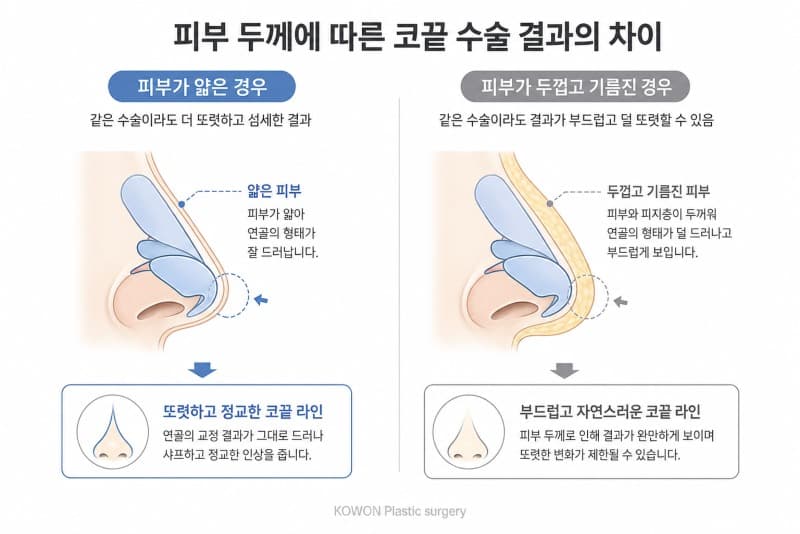
Distinguishing cartilage from fat causes and choosing the matching approach is needed for a lasting bulbous-nose result.
If your skin is thick, it is also best to know beforehand that the extent of change will differ.
At consultation, ask both whether cartilage or fat causes your bulbous nose and how slim it can become with your skin thickness. This can reduce disappointment after surgery.
— Dr. Kim Hyung-taek, Director of KOWON Plastic Surgery