
KOWON Blog
Tip inflammation — what happens if left untreated: early signals and when tip revision gets considered
If redness, warmth, or pain persists at the tip after nose surgery, it needs checking whether it's simple swelling or tip inflammation. Early inflammation signals, how neglect leads through fibrosis to contracture, and the criteria for considering revision surgery.
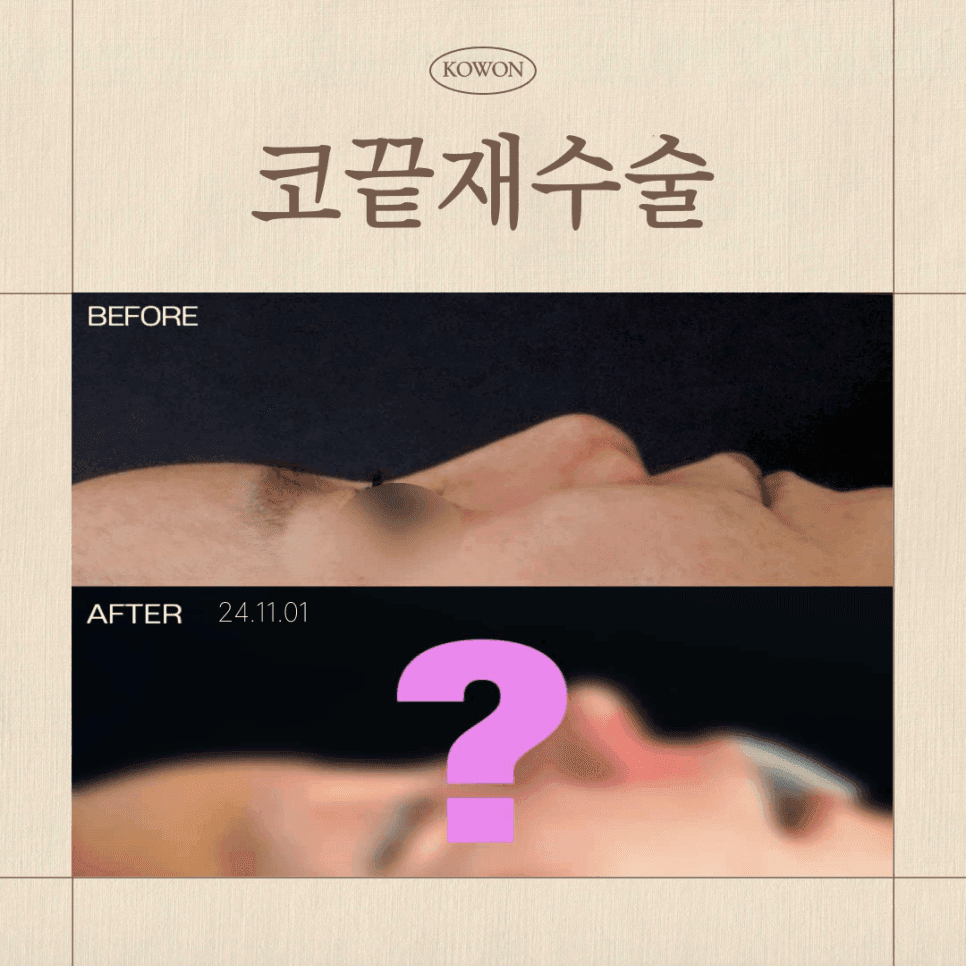
Key points
- Swelling and redness for a period after nose surgery are common, but if warmth and pain continue over time, check whether it's tip inflammation.
- If inflammation is neglected and becomes chronic, tissue hardens through fibrosis, which can lead to contracture pulling the tip upward.
- Early inflammation can stabilize with medication and care — but if inflammation recurs or tissue change has begun, revision removing the causative implant and rebuilding the structure gets considered.
"My tip turned red after nose surgery — is it okay?"
Noticing changes like this after surgery is naturally worrying. Some swelling or redness for a period after nose surgery is a natural process. But if warmth or pain continues over time, tip inflammation becomes a suspicion. In some cases things stabilize with time; in others, tissue change follows and tip revision becomes a consideration. This article organizes the early signals of tip inflammation together with the criteria for considering revision surgery.
01
What are the early signals of tip inflammation?
Some swelling or redness for a period after nose surgery is a relatively common process. But if changes persist past a certain time, they may be signals of tip inflammation. The following changes typically appear.
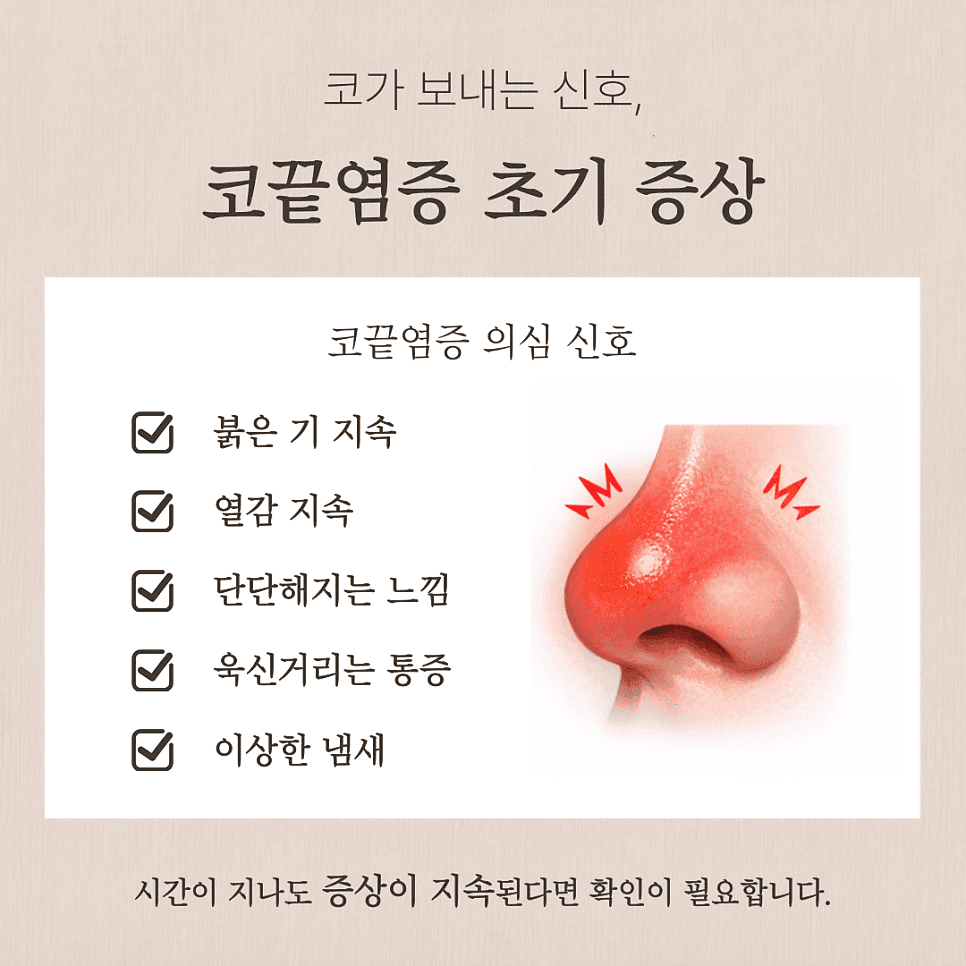
- Tip redness persisting for a long time
- Warmth that keeps being felt
- A feeling of the tip gradually hardening
- Stinging or throbbing pain
- An unusual smell inside the nose
Not all of these changes mean inflammation. But if symptoms persist over time, it needs checking whether it's simple swelling or tip inflammation.
02
What changes occur if tip inflammation is left untreated?
Caution is needed because hoping 'it'll get better with time' can actually worsen the situation. Enduring inflammation with medication alone while neglecting it can change the inside of the nose quickly.
If it becomes chronic inflammation, internal tissue can go through fibrosis — hardening like scar tissue. The hardened tissue then contracts and can pull the implant and tip upward — contracture. Eventually the nose shortens and the nostrils become overexposed frontally, turning into an upturned (piggy) nose shape.
At this stage, tissue damage is severe and restoration itself becomes very difficult — tip revision to rebuild the structure may be needed.
03
By what criteria is tip revision considered?
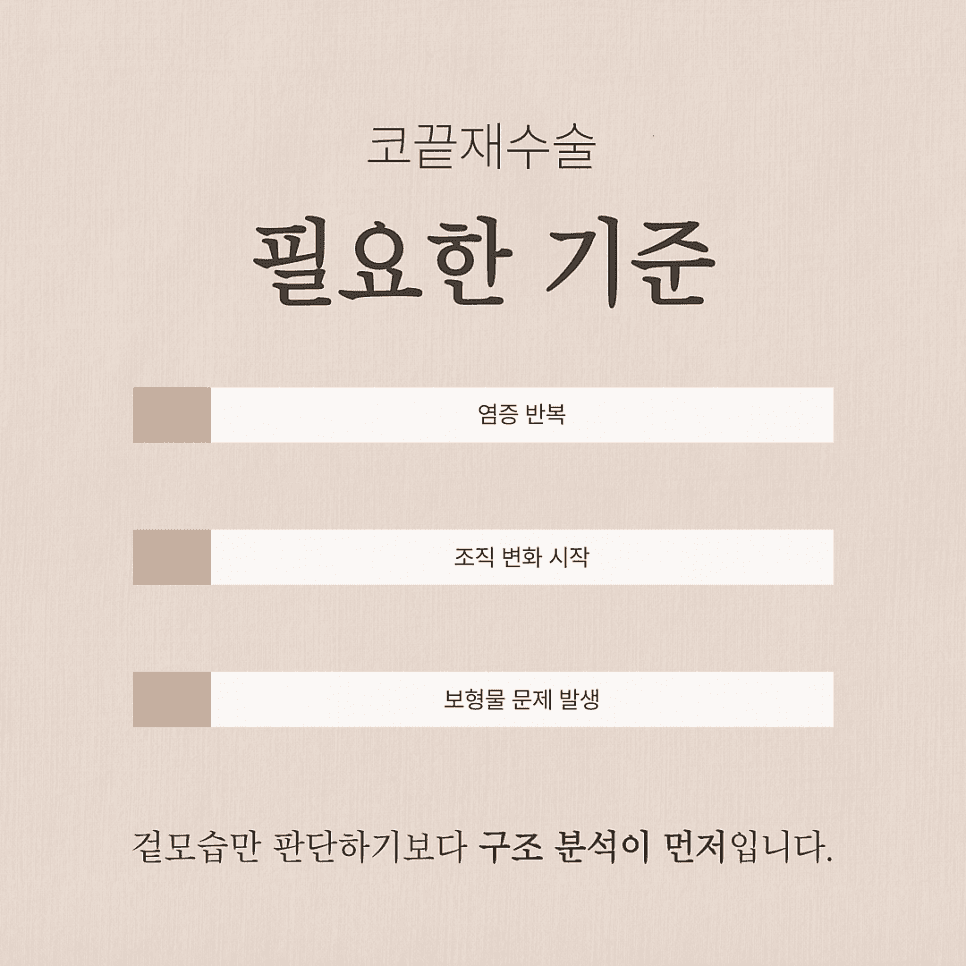
Not all tip inflammation leads to revision. Treatment direction can differ by inflammation severity and tissue state. Early-stage inflammation can sometimes stabilize with medication or care. But if inflammation recurs or tissue change has begun, revision removing the causative implant and rebuilding the nasal structure may be needed. What gets checked before revision can be seen in detail in the nose revision guide.
The principles kept in revision are as follows.
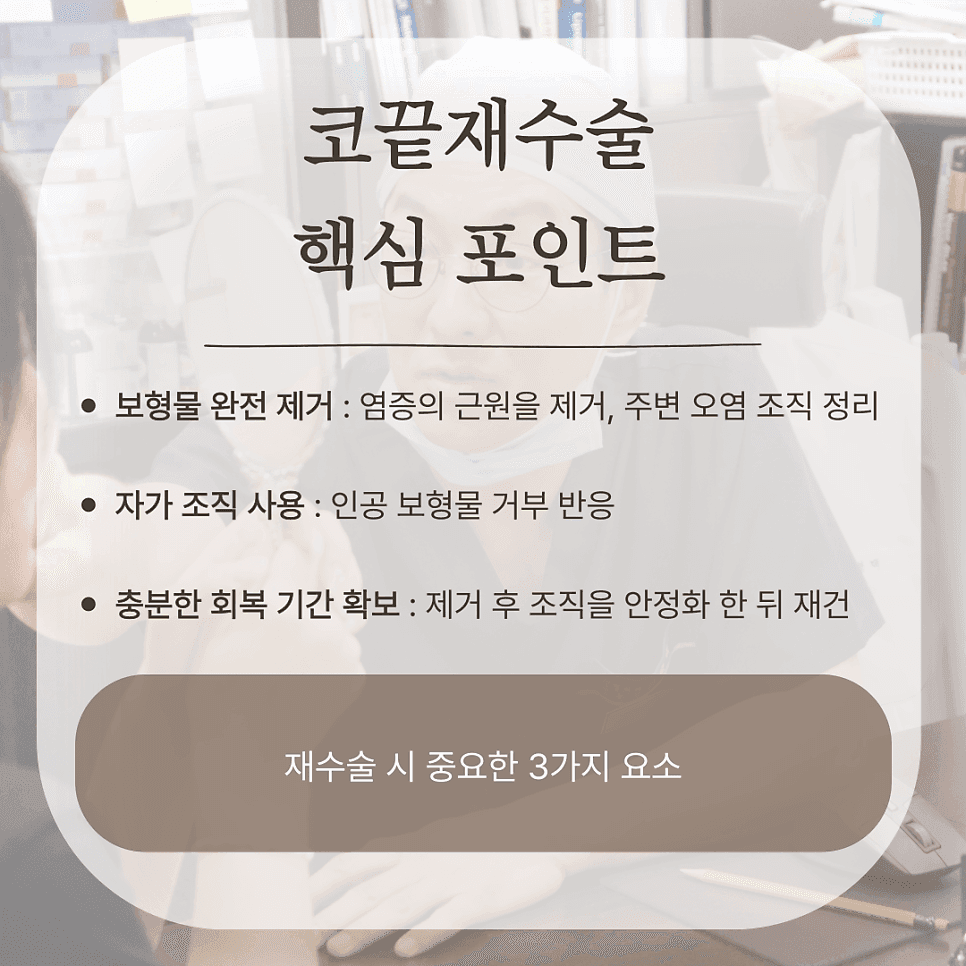
- 01Complete removal of the causative implant — cleanly removing the existing silicone causing the inflammation and precisely clearing surrounding contaminated tissue.
- 02Use of autologous tissue — when there's a rejection response to artificial implants, approaching with one's own tissue — autologous rib cartilage, septum, autologous dermis — to reduce foreign-body burden.
- 03Timing — if infection is severe, the principle is waiting at least 6 months after removal for tissue to stabilize before reconstructing. A safe result comes before haste.
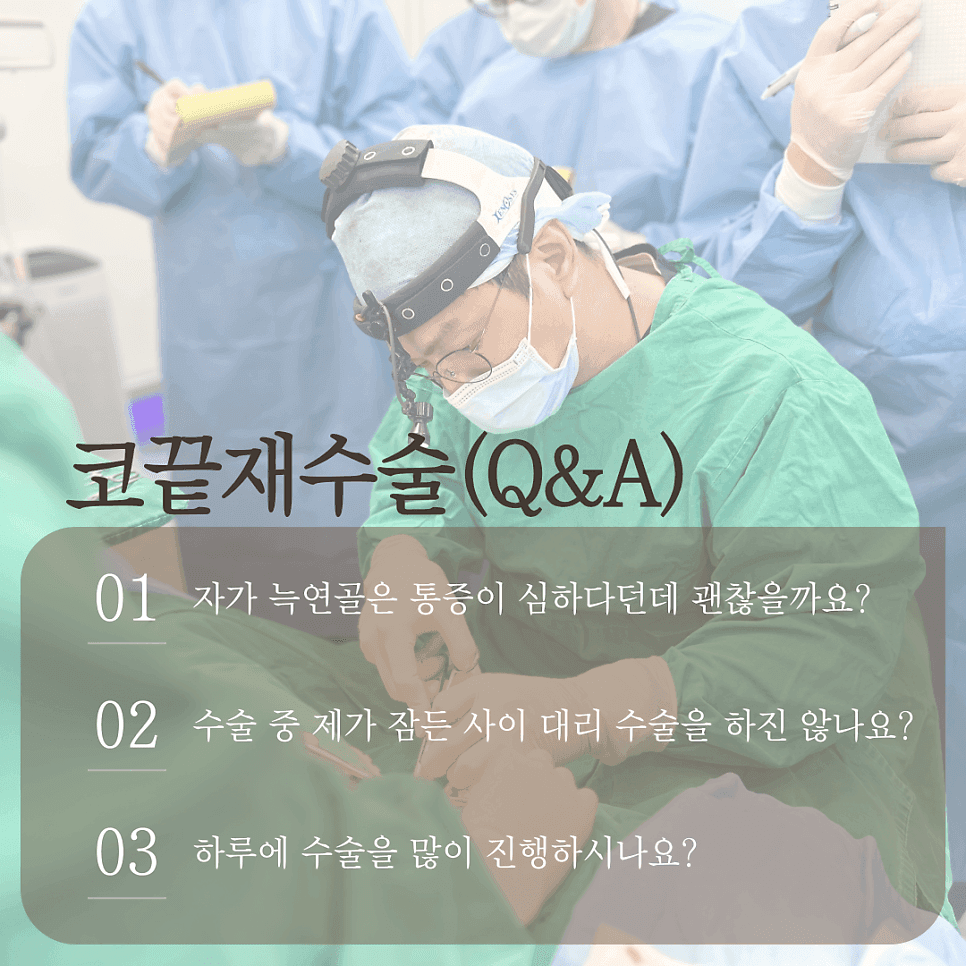
In actual consultations there are also many questions about rib cartilage use and the surgical environment, so they're organized together in the FAQ below.
04
Summary — checking whether it's simple swelling or inflammation comes first
Changes appearing after nose surgery can sometimes stabilize naturally over time. But if tip redness, warmth, or pain recurs, a process of checking whether it's simple swelling or tip inflammation is needed. If you're worried about nasal changes, rather than judging alone, first check the current nasal state and tissue changes.
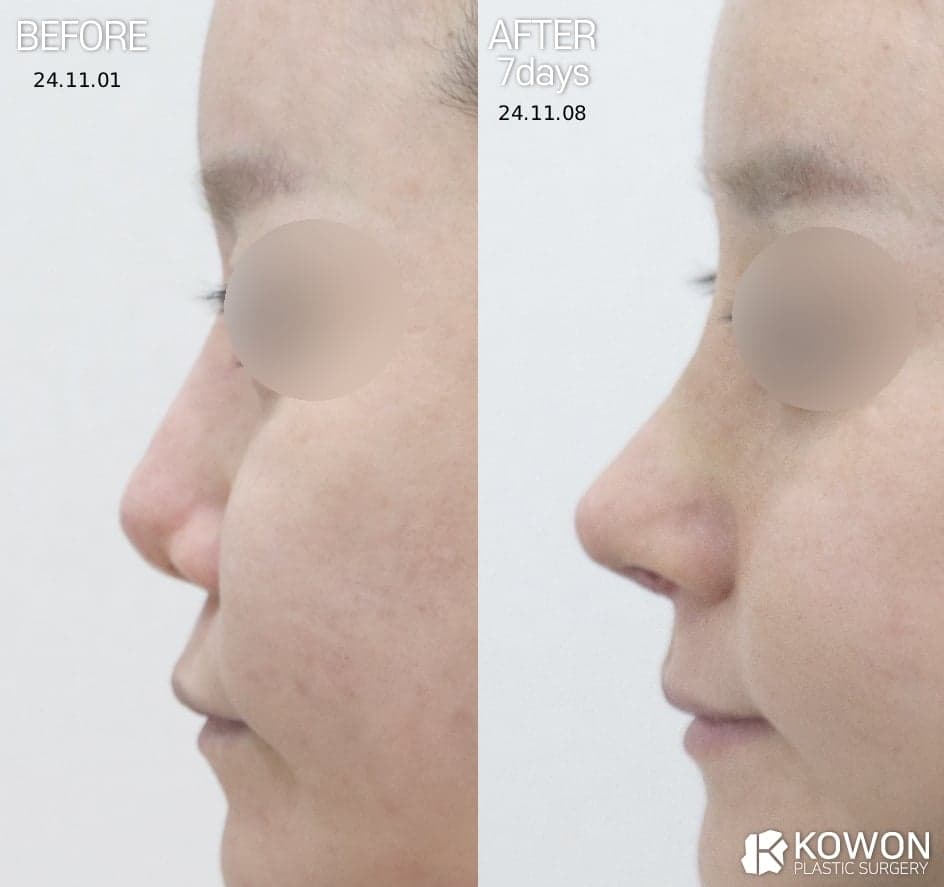
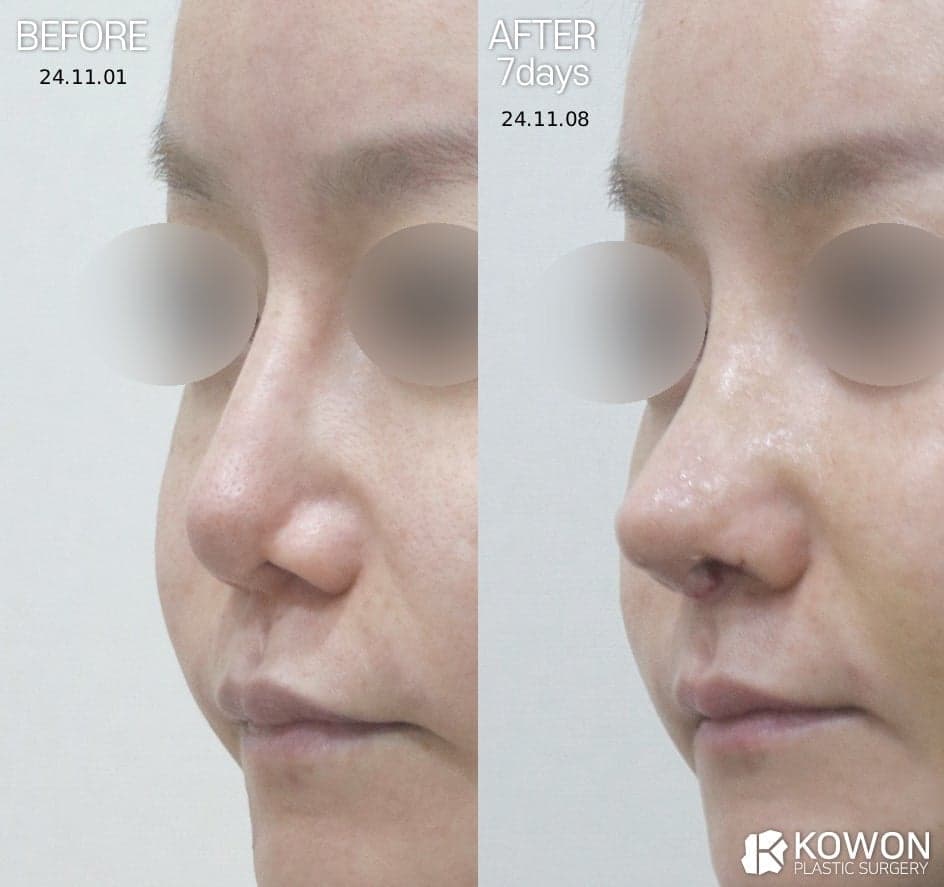
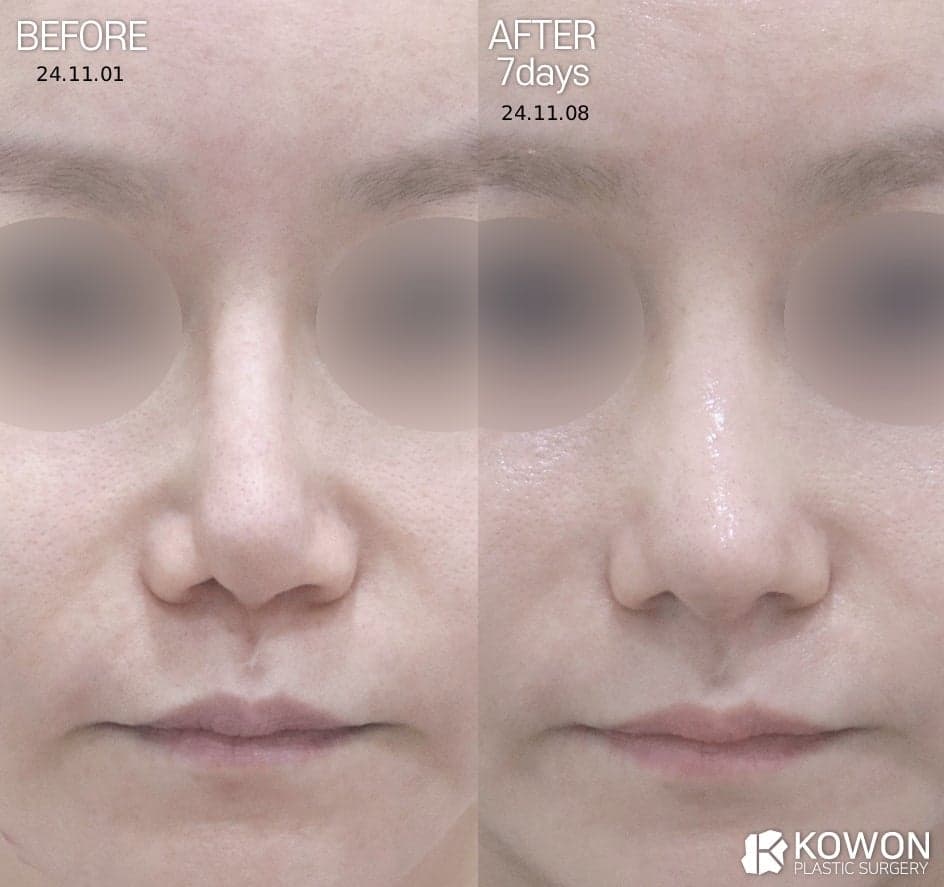
If worried about your tip's current state, it can be checked in a 1:1 video consultation. Contracture revision cases can be seen in before & after photos.
Frequently asked questions
Answers to common questions patients ask before a consultation.
The harvest process can differ in burden depending on method and skill level. We proceed in a direction that reduces tissue burden through a comparatively quick harvest process.
If inflammation becomes chronic, fibrosis progresses — internal tissue hardens — and tissue contraction can lead to contracture pulling the implant and tip upward. The nose can shorten or the tip can turn up, so checking early signals is important.
If infection is severe, the principle is removing the causative implant, then waiting at least about 6 months for tissue to stabilize before reconstructing. Timing can differ by inflammation severity and tissue state, so checking is needed.
Responses to treatment and recovery progress vary by individual. Outcomes and side effects vary from person to person. Bleeding, infection, swelling and asymmetry may occur. Please consult our medical team before making a decision.
Consultation